
Do you ever find yourself forgetting new words as soon as you learn them? The secret to moving English from your textbook to your brain lies in one simple rule: Make yourself the protagonist. By using "I" as the subject of your sentences, you can bridge the gap between "knowing" and "using" English.
Here is why this method is a game-changer for language learners.
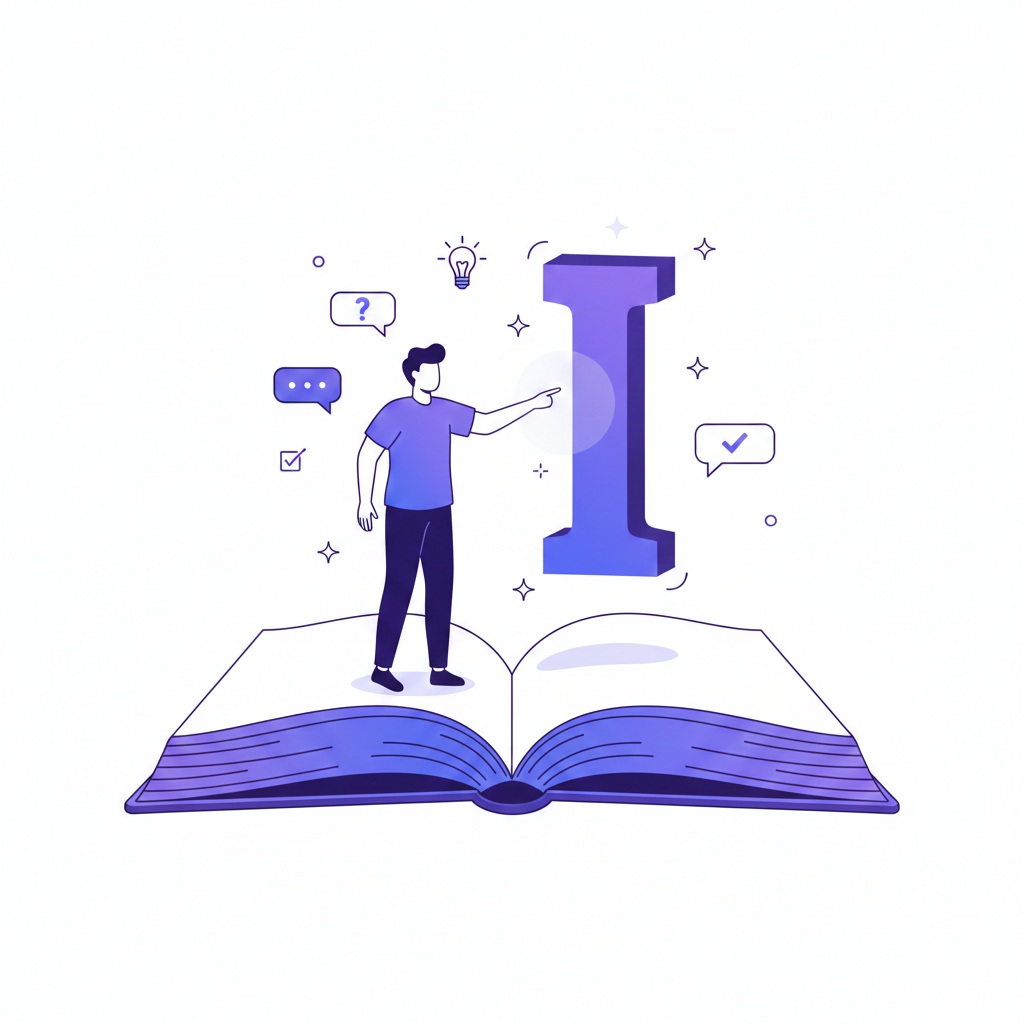
Connect vocabulary to your own life stories.
1. Telling Your Brain "This Matters"
Textbook examples are often about people you don't know. Your brain is smart—it filters out irrelevant information to save energy. When you create a sentence about yourself, your brain recognizes it as "essential information for survival" and prioritizes its storage.
2. The Power of "Self-Referencing"
In psychology, the Self-Referencing Effect explains that people remember information better when it is related to themselves. When you ask, "How would I use this word tomorrow?", you engage in deeper analytical processing, making the memory far more durable than passive reading.
3. Simulating Real-Life Situations
Making yourself the hero triggers a "Mental Simulation." Instead of memorizing a word as a abstract concept, you link it to a visual image of yourself speaking. This creates a mental "shortcut" that allows you to recall the phrase instantly during a real conversation.
Conclusion
Personalizing your sentences is the switch that transforms "someone else's knowledge" into "your own experience." Try writing just one sentence about your day using a new word. You will be amazed at how much easier it is to remember!
Practice what you learned.
Why not try writing a diary using the phrases you learned?
Our AI Tutor will correct your English to sound more natural.